
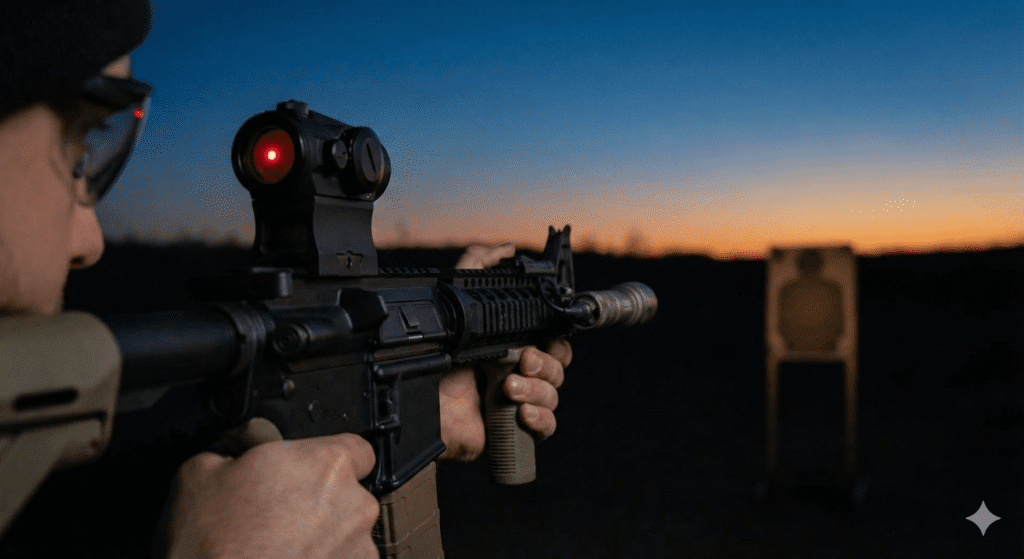
This guide highlights practical low light shooting tips that help buyers understand how optics behave in dim settings, while giving retailers a clear framework to recommend mission-ready products that stay reliable long after daylight fades.
📈 Why mastering low light shooting tips matters
As lighting drops, vision, depth perception, and target contrast all become harder to interpret. High-performance optics reduce these challenges and keep the sight picture stable.
- 🌘 Reduced contrast blends targets into the background.
- 🔆 Emitter bloom or glare overwhelms the scene at night.
- 🎯 Depth perception shifts when illumination changes suddenly.
- 🌫️ Temperature swings test sealing and fog resistance.
- 🧭 Situational awareness relies heavily on window clarity.
Retail insight 💡
Shops that explain these low light shooting tips help customers understand why better optics justify their price—and which features truly matter after dark.
🔍 Common low light visibility issues
Low-light conditions reveal weaknesses in optics that look fine during daytime use. These are the issues customers report most often.
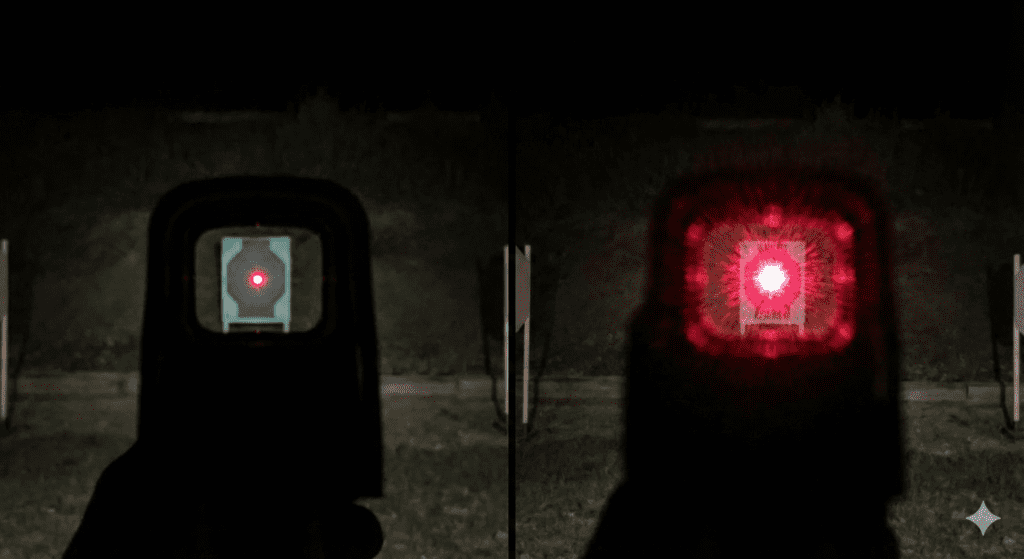
💥 Problem 1: Reticle bloom or starburst
When brightness jumps are too large, the reticle blooms and hides the target. Optics with multiple low-intensity steps solve this problem.
🔭 Problem 2: Heavy tint or poor coatings
Dark or overly tinted glass absorbs available light instead of preserving contrast. High-efficiency coatings keep the scene brighter and cleaner.
🌫 Problem 3: Lens fog in shifting temperatures
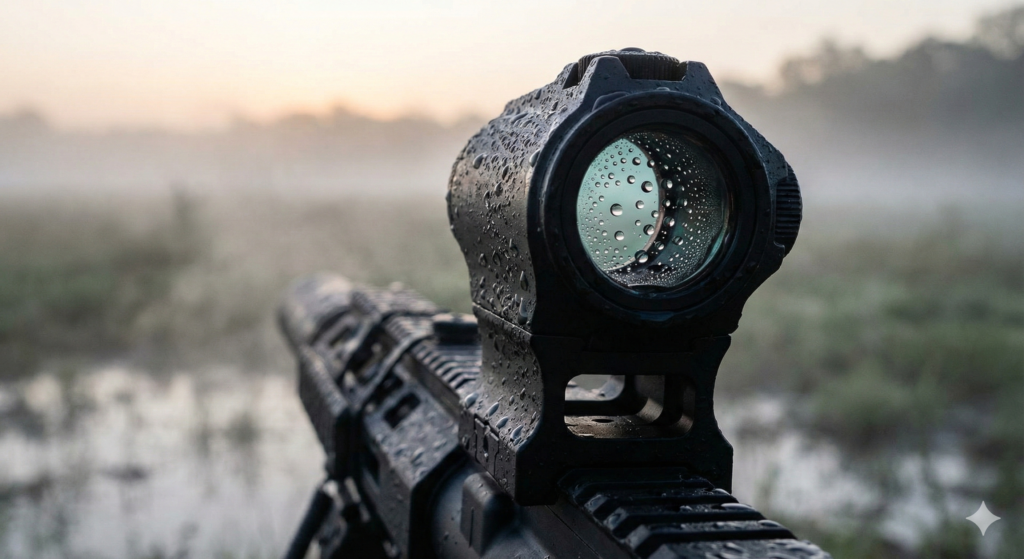
Humidity or sudden temperature changes fog poorly sealed optics. Nitrogen-purged, IP-rated housings stay clear during dusk and early morning sessions.
🛠 Problem 4: Controls too hard to adjust at night
Shooters should not struggle to find buttons or dials in the dark. Tactile, easy-to-locate controls allow seamless adjustment without losing situational awareness.
🔦 Optics that excel when applying low light shooting tips
Not all optics respond the same way in dim conditions. These categories perform far better at dusk or in full darkness.
🔴 Red dots with refined low-brightness steps
Good red dots offer multiple low-output options that keep the reticle crisp instead of overwhelming the scene.
- ✔ Smooth brightness transitions
- ✔ Anti-reflective coatings
- ✔ Minimal reticle bloom
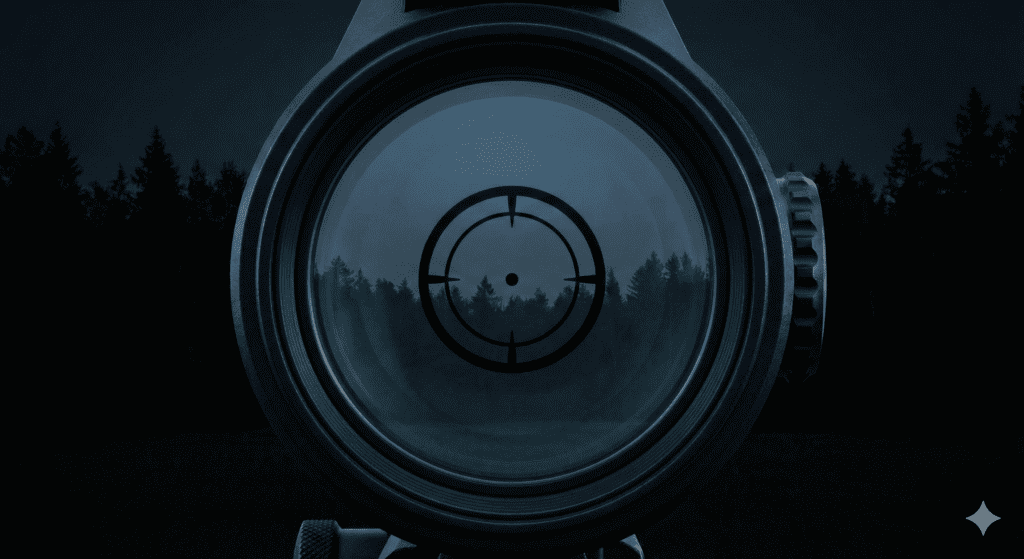
🔍 Prism sights with etched reticles
The etched reticle stays visible even without illumination, making these optics ideal for shooters who struggle with dot distortion at night.
🌒 Optics featuring high-efficiency coatings
Proper coatings maintain contrast, reduce glare, and help the shooter interpret shadows more accurately.
🌙 NV-compatible models
For advanced customers or those training with night-vision gear, NV-compatible brightness settings prevent retina or sensor overload.
🛠 What to consider when choosing optics for low light shooting tips
🔆 Reticle brightness range and low output levels
Fine increments make it easier to dial in the perfect brightness without bloom. This is a core component of effective low light shooting tips.
🪟 Lens clarity and minimal tint
Clarity becomes even more important at night. Glass that enhances ambient light makes targets easier to interpret.
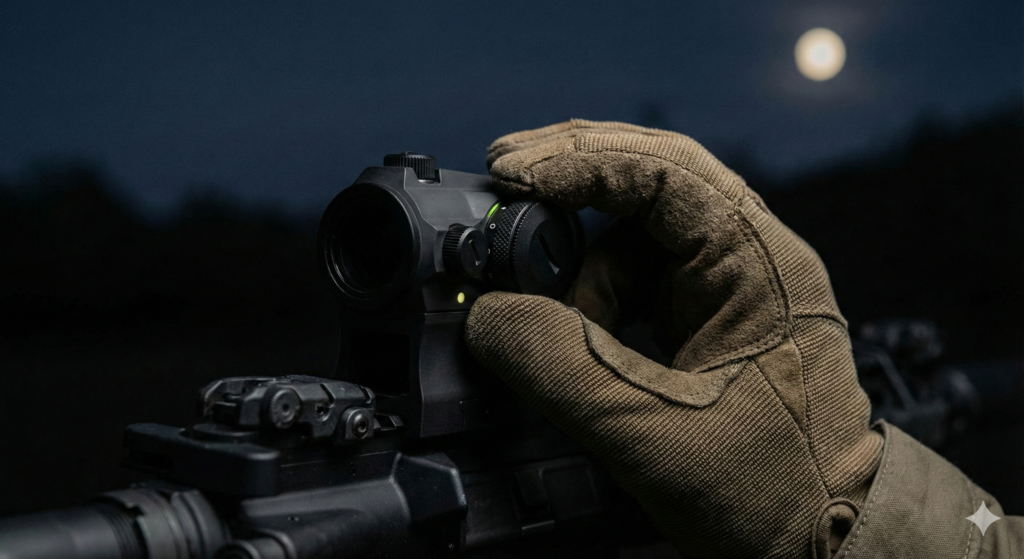
🤲 Tactile and intuitive controls
Customers should be able to adjust settings by feel alone. Well-designed controls reduce fumbling in the dark.
🧱 Durability and weather protection
Dew, humidity, and temperature swings require optics with reliable sealing and strong housings.
📐 Window size and field of view
A larger viewing window helps maintain orientation when the environment gets dark or visually cluttered.
🧭 Matching low light shooting tips to different customers
Different users benefit from different approaches. This table helps retail teams make targeted recommendations.
| User type | Low-light priority | Ideal optic traits | Retail guidance |
|---|---|---|---|
| New shooters | Clear reticle visibility | Fine brightness control, clean coatings | Demonstrate low-output brightness steps in-store. |
| Outdoor hobbyists | Contrast at dusk | High-efficiency coatings, wide window | Explain how coatings maintain usable contrast. |
| Preparedness buyers | Reliability in harsh conditions | IP-rated sealing, shock-tested build | Highlight long-term stability and retention. |
| Astigmatic shooters | Crisp aiming reference | Etched reticle prism | Show how prism reticles remain sharp at night. |
| Training-focused users | Fast adjustment | Tactile controls, NV-compatible steps | Recommend models with intuitive brightness indexing. |
📊 Optic performance comparison for low light use
This comparison helps customers understand which type of optic best supports their nighttime needs.
| Optic type | Low-light strengths | Limitations | Best for |
|---|---|---|---|
| Red dot sight | Fast alignment, simple controls | Possible bloom at higher settings | Everyday retail buyers |
| Prism sight | Etched reticle clarity, no bloom | More critical eye position | Astigmatic or precision-minded users |
| NV-compatible red dot | Ultra-low reticle output | Requires familiarity with NV systems | Advanced buyers |
| Coated optics | Better contrast and clarity at dusk | Higher cost | Outdoor shooters |
For additional information on optical coatings and light transmission science, visit the independent resource Edmund Optics Knowledge Center.
🤝 Helping retail customers use low light shooting tips effectively
Retail teams can dramatically improve customer satisfaction by demonstrating how optics behave when illumination drops.
- 📦 Show how brightness adjustments affect reticle bloom.
- 🌙 Use dim in-store lighting to highlight coating differences.
- 🧪 Compare window sizes to illustrate nighttime awareness.
- 🎨 Use OEM/ODM customization for clearer markings and controls.
- 🛡 Stock models with strong sealing and dependable zero retention.
AKSIGHT provides optics engineered for dim-light environments, including refined brightness steps, high-efficiency coatings, IP-rated sealing, and shock-tested durability. OEM/ODM options, low MOQs, and fast lead times help retailers supply reliable nighttime optics their customers trust.
❓ FAQ – common questions about low light shooting tips
Q1: What brightness level works best for low light shooting?
Lower reticle settings usually give the cleanest sight picture, preventing bloom or glare against dark backgrounds.
Q2: Do coatings actually improve nighttime clarity?
Yes. Good coatings preserve contrast and reduce reflections, making targets easier to interpret after sunset.
Q3: Are prism sights better at night?
Prism sights offer crisp etched reticles even without illumination, which helps shooters who experience dot distortion.
Q4: Should new shooters choose NV-compatible optics?
NV settings help when using night-vision gear, but they’re not required for general low-light training.
Q5: Why do budget optics struggle in dim conditions?
Limited brightness control, cheaper coatings, and lower-quality sealing all reduce nighttime visibility.
Q6: Can one optic serve day and night use?
Yes—models with a wide brightness range and proper coatings adapt well to both environments.
⭐ Final thoughts – applying low light shooting tips with confidence
With the right gear and a solid understanding of low light shooting tips, shooters maintain clear, controlled sight pictures long after sunset. Optics with strong coatings, refined brightness control, and durable construction make all the difference when light disappears.
For retailers and distributors, AKSIGHT offers optics built for tough nighttime environments, supported by OEM/ODM customization, low MOQs, IP-rated sealing, and fast delivery—making it easier to supply gear that customers trust in low-light conditions.
Related reading: