
For many users, the wrong choice leads to poor visibility, slower target acquisition, or unnecessary bulk. Understanding how each optic performs in real-world conditions helps avoid costly mistakes and ensures consistent performance.
This guide breaks down the key differences between mini and full size red dots, highlights practical use cases, and shows how to match the right optic to your setup.
🔍 Mini Red Dot vs Full Size Red Dot: Key Differences
At a glance, the debate around mini red dot vs full size red dot comes down to size, weight, and performance t
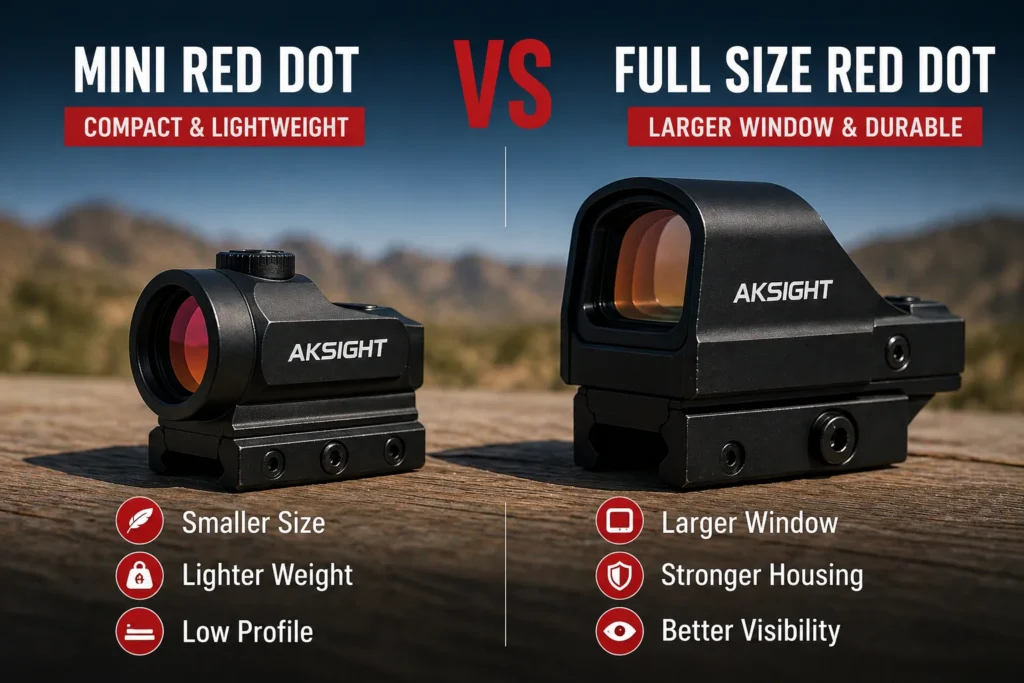
rade-offs. Both serve the same purpose, but their design priorities are different.
- Mini Red Dot: Compact, lightweight, optimized for fast handling
- Full Size Red Dot: Larger window, more robust housing, longer battery life
Mini optics prioritize portability and low profile design. Full size optics focus on durability and easier visual acquisition.
🔭 Types of Red Dot Sights
🔹 Mini Red Dot Sights
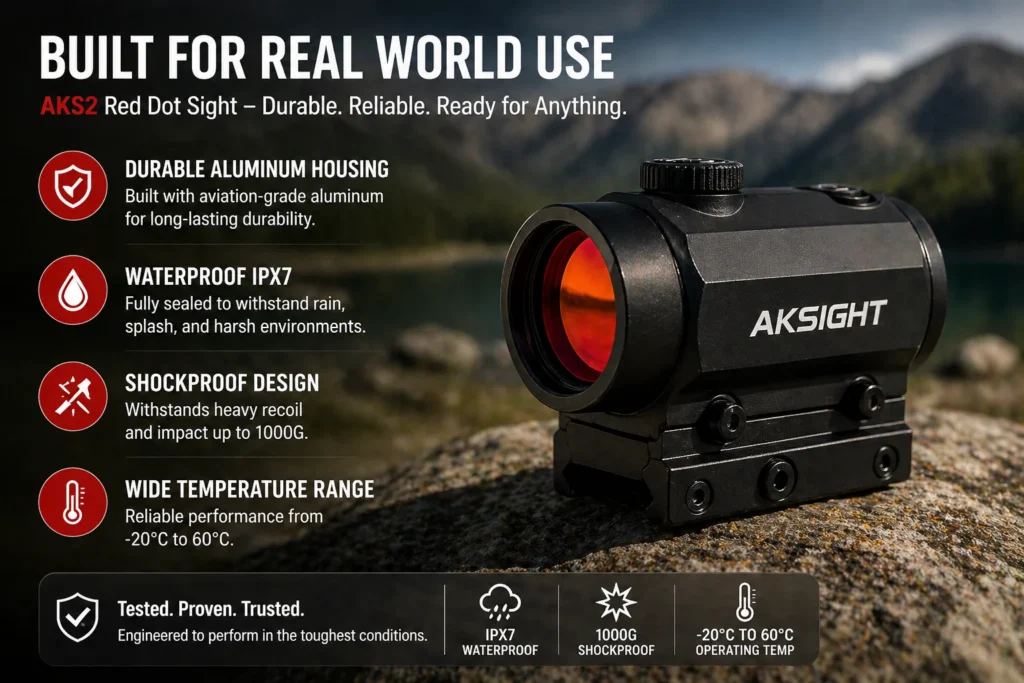
Mini red dots are designed for compact setups. They reduce weight and keep the overall profile streamlined.
Modern designs like the
AKS2 red dot sight
balance compact size with durability, offering a practical solution for users who want mobility without sacrificing performance.
- Lightweight construction ⚙️
- Smaller window size
- Faster handling in close-range scenarios
- Lower mounting profile
🔹 Full Size Red Dot Sights
Full size red dots are built for stability and ease of use. The larger window improves sight picture and reduces eye alignment issues.
- Larger viewing window 🔭
- Stronger housing structure
- Extended battery life
- Better performance in harsh environments
🎯 Buying Criteria: Mini Red Dot vs Full Size Red Dot
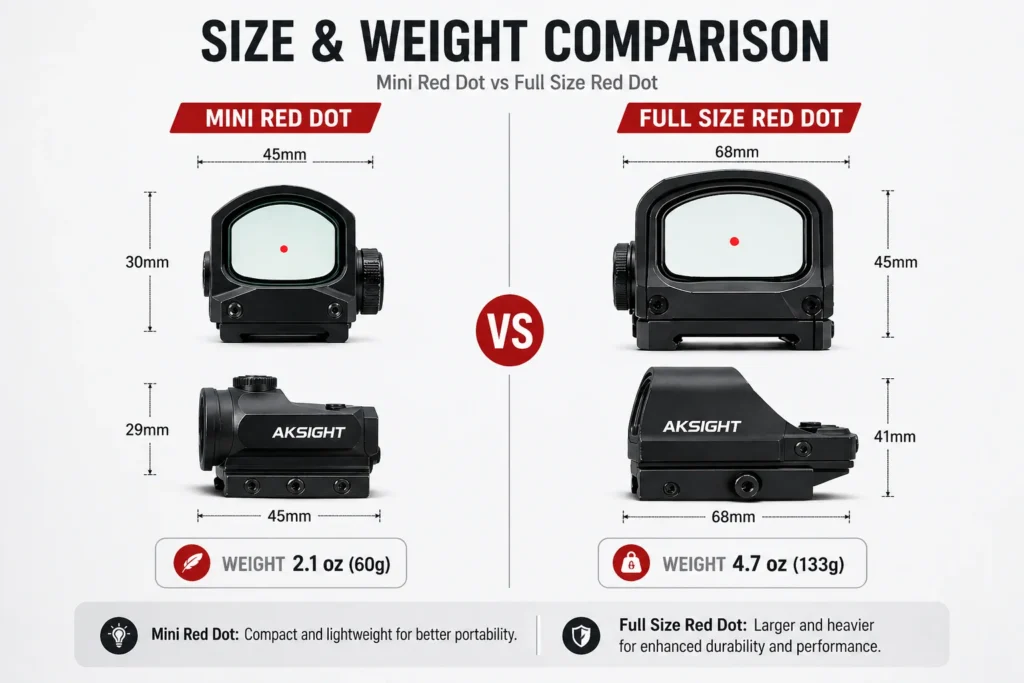
⚙️ Size and Weight
Mini red dots excel in portability. If weight matters, they are the better choice. Full size optics add bulk but improve stability.
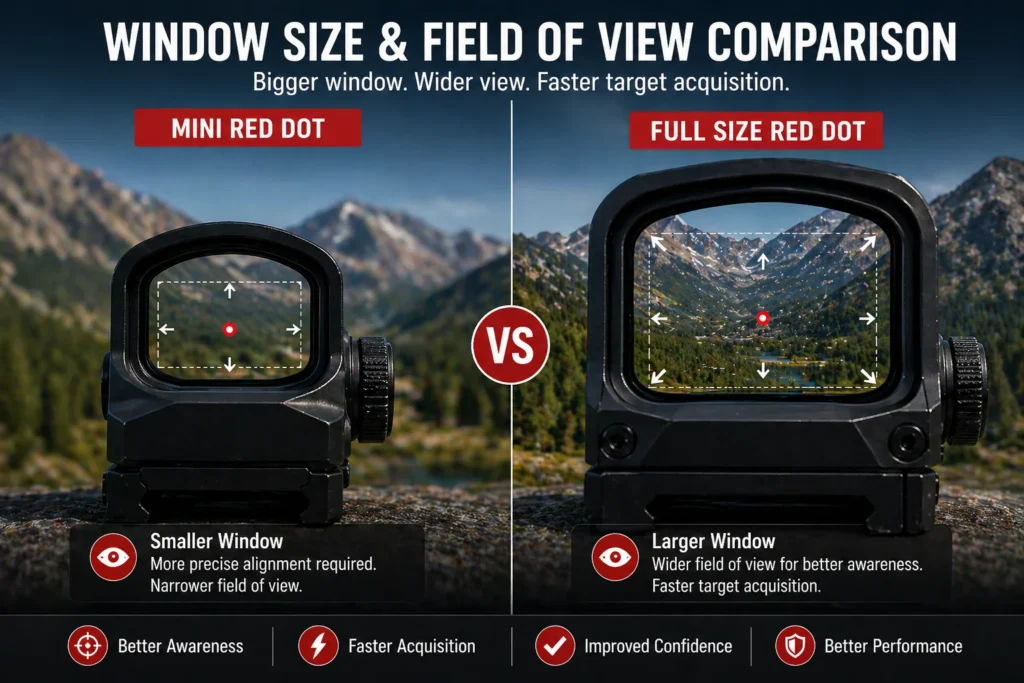
👁️ Window Size and Field of View
Full size red dots provide a wider field of view, making target acquisition easier. Mini optics require more precise alignment but can still perform well with training.
🛡️ Durability and Build Quality
Full size optics generally offer thicker housings and better impact resistance. However, modern mini optics with reinforced aluminum construction can still deliver reliable performance.
🔋 Battery Life
Full size red dots typically support longer battery life due to larger internal space. Mini optics are improving rapidly but may require more frequent maintenance.
🌧️ Environmental Resistance
IP ratings and sealing quality matter more than size. A well-built mini optic can outperform a poorly sealed full size unit.
👥 User Fit: Which One Is Right for You?
| User Type | Recommended Option | Reason |
|---|---|---|
| Beginner Users | Full Size Red Dot | Easier to use, larger viewing window |
| Weight-Sensitive Setup | Mini Red Dot | Compact and lightweight |
| Harsh Environment Use | Full Size Red Dot | Stronger housing and durability |
| Everyday Practical Use | Mini Red Dot | Balanced size and performance |
📊 Mini Red Dot vs Full Size Red Dot Comparison
| Feature | Mini Red Dot | Full Size Red Dot |
|---|---|---|
| Size | Compact | Larger |
| Weight | Lightweight | Heavier |
| Window Size | Smaller | Larger |
| Durability | Moderate to High | High |
| Battery Life | Moderate | Long |
🔥 Recommended AKSIGHT Option
If you’re deciding between mini red dot vs full size red dot, a balanced option like the
AKS2 Red Dot Sight
offers a practical middle ground.
It combines compact dimensions with a clear lens, durable housing, and stable performance—making it suitable for users who want versatility without excess bulk.
❓ FAQ: Mini Red Dot vs Full Size Red Dot
Is a mini red dot less accurate than a full size red dot?
No. Accuracy depends on the optic quality and user skill, not size.
Which is better for beginners?
Full size red dots are generally easier to use due to larger viewing windows.
Do mini red dots break more easily?
Not necessarily. High-quality mini optics are designed to withstand impact and environmental stress.
Is battery life a major concern?
Full size optics usually last longer, but modern mini optics are improving quickly.
Which one is better for long-term use?
Both can perform well long-term if built with durable materials and proper sealing.
🧭 Final Thoughts: Mini Red Dot vs Full Size Red Dot
The choice between mini red dot vs full size red dot depends on your priorities. If you value portability and speed, mini optics are the better fit. If durability and ease of use matter more, full size optics are the safer option.
AKSIGHT focuses on delivering optics that balance clarity, durability, and real-world usability. With OEM/ODM capabilities 🧩, consistent quality control ⚙️, and practical product design, AKSIGHT supports both individual users and bulk buyers.
Explore more options at AKSIGHT official website to find the right optic for your needs.