
🔍 Red Dot Footprint Guide: Why It Matters
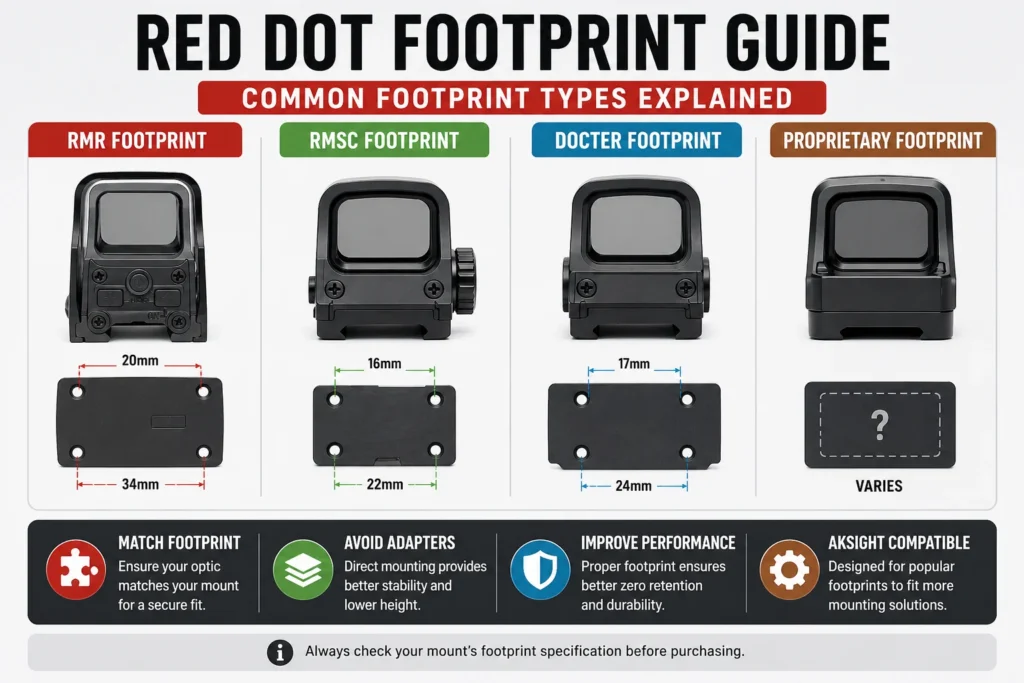
A red dot footprint refers to the mounting pattern on the bottom of the optic—specifically the screw hole spacing and recoil lug placement. ⚙️
If the footprint does not match your mounting platform:
- ❌ The optic cannot be installed directly
- ❌ You may need adapter plates (adds height and complexity)
- ❌ Stability and zero retention may be affected
Understanding footprint compatibility ensures:
- ✔ Proper fit without modification
- ✔ Lower mounting height for better alignment
- ✔ More secure attachment under recoil
For a technical overview of optical mounting systems, you can reference Edmund Optics. 🔬
🔭 Common Red Dot Footprint Types
🔹 RMR Footprint
One of the most widely used standards in the optics market. The RMR footprint is known for its durability and strong mounting interface.
- ✔ Broad compatibility across mounts
- ✔ Secure recoil lug design
- ✔ Common in mid-to-full size optics
For OEM projects, RMR footprint compatibility is often the safest choice due to its market adoption. 🧩
🔹 RMSc Footprint
Designed for compact optics, RMSc footprints are typically used in smaller red dot sights.
- ✔ Lightweight and low-profile
- ✔ Ideal for compact setups
- ✔ Increasing popularity in modern designs
Many AKSIGHT mini optics are engineered around RMSc compatibility for easier integration. 🎯
🔹 Docter/Noblex Footprint
An older but still relevant footprint pattern found in various optics.
- ✔ Simple mounting design
- ✔ Supported by many legacy mounts
- ❗ Less common in newer product lines
🔹 Proprietary Footprints
Some manufacturers use custom footprints, which require dedicated mounting solutions.
- ❗ Limited compatibility
- ❗ Requires specific mounting plates
- ✔ Allows unique product design
For OEM/ODM clients, AKSIGHT can customize footprint designs based on your distribution needs. 🧩
🎯 How to Choose the Right Red Dot Footprint
🔧 Check Mount Compatibility First
Before selecting an optic, confirm the mounting platform you are using. Matching the footprint directly avoids unnecessary adapters.
📏 Consider Mounting Height
Using adapter plates can increase optic height, which may affect alignment and user experience.
⚙️ Prioritize Stability
A well-matched footprint ensures better contact between optic and mount, improving durability and zero retention.
🔄 Plan for Future Flexibility
Choosing a common footprint like RMR or RMSc allows easier upgrades and product swaps later.
👥 User Fit Mapping
| User Type | Recommended Footprint | Reason |
|---|---|---|
| Retail Buyers | RMR / RMSc | Easy compatibility and availability |
| Distributors | RMR | Broad market demand |
| OEM Clients | Custom / RMR | Flexible product positioning |
| Compact Optic Users | RMSc | Lightweight and low profile |
📊 Footprint Comparison Table
| Footprint Type | Compatibility | Typical Use | Market Adoption |
|---|---|---|---|
| RMR | High | General-purpose optics | ⭐⭐⭐⭐⭐ |
| RMSc | Medium-High | Compact optics | ⭐⭐⭐⭐ |
| Docter | Medium | Legacy optics | ⭐⭐⭐ |
| Proprietary | Low | Brand-specific designs | ⭐⭐ |
❓ Red Dot Footprint Guide FAQ
What is a red dot footprint?
A red dot footprint is the mounting pattern on the optic that determines compatibility with mounts or plates.
Can I use an adapter plate?
Yes, but it may increase height and slightly affect stability. Direct fit is always preferred.
Which footprint is most common?
RMR is currently the most widely adopted footprint across the market.
Are all mini red dots RMSc?
Not all, but RMSc is one of the most common standards for compact optics.
Does footprint affect durability?
Yes. A well-matched footprint improves mounting strength and helps maintain zero under stress. ⚙️
🧭 Final Thoughts on Red Dot Footprint Guide
This Red Dot Footprint Guide highlights one key truth: compatibility matters just as much as optical performance. Choosing the right footprint ensures better fit, stronger mounting, and long-term reliability.
At AKSIGHT, we focus on designing optics with widely supported footprints while offering OEM/ODM customization options. Whether you are building a retail product line or sourcing for distribution, footprint compatibility should be a top priority. 🧩