
For users comparing entry-level options or OEM-based optics, the decision often comes down to eye clarity, environment, and reliability—not just price.
🔍 Red Dot vs Prism Scope: Why This Comparison Matters
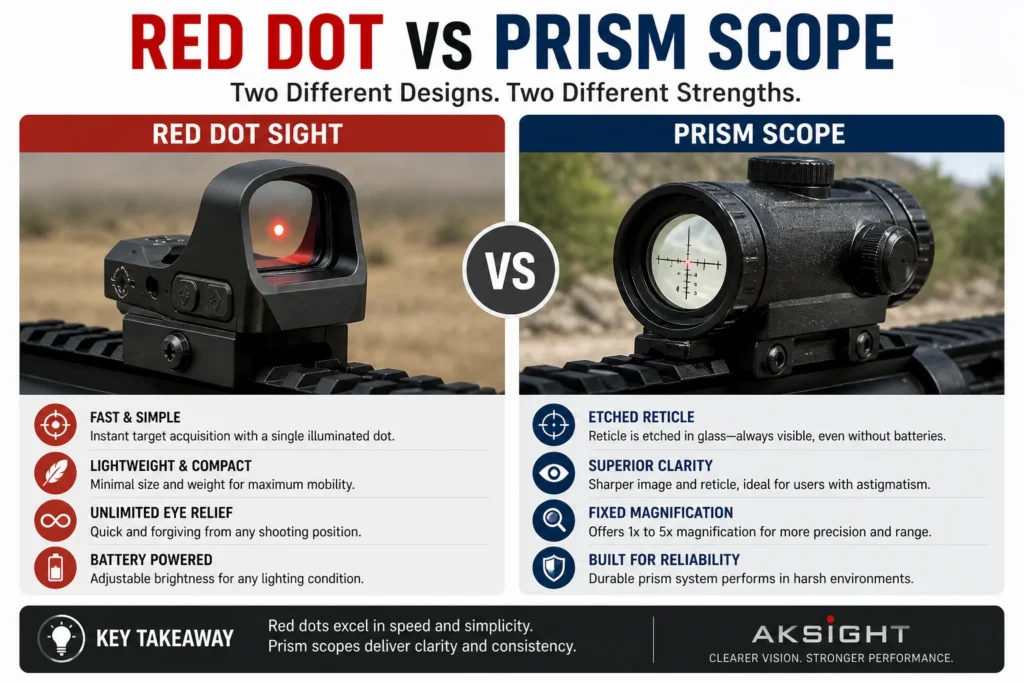
At a glance, both optics look similar. But internally, they are completely different systems.
A red dot sight projects an illuminated dot onto a lens using an emitter. A prism scope uses a fixed etched reticle combined with optical magnification. ⚙️
This difference affects everything—from how the reticle appears, to how the optic performs in harsh conditions.
🔭 Types of Optics in This Comparison
🔴 Red Dot Sights
Red dot optics use LED emitters to project a dot onto the lens. They are designed for speed and simplicity.
Key characteristics:
- Unlimited eye relief
- Fast target acquisition
- Lightweight and compact
- Battery-dependent illumination
Explore models: AKSIGHT Red Dot Collection
🔷 Prism Scopes
Prism optics use a glass prism system and etched reticle. This allows the reticle to remain visible even without illumination.
Key characteristics:
- Fixed magnification (usually 1x–5x)
- Etched reticle (no blur issues)
- Sharper image clarity
- Slightly heavier than red dots
🎯 Red Dot vs Prism Scope: Key Buying Differences
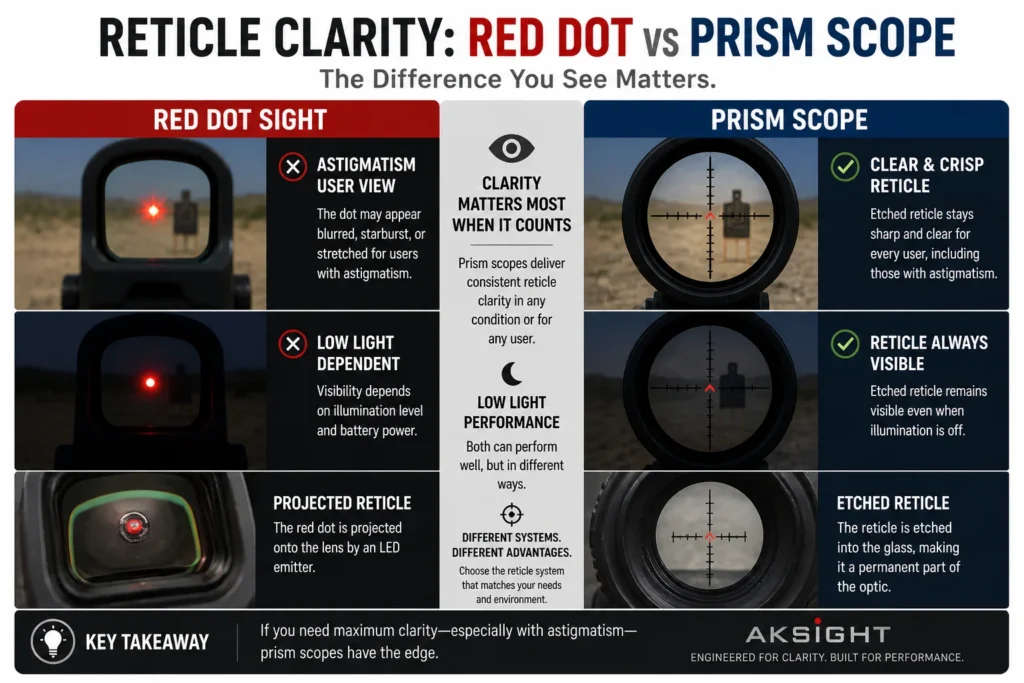
👁️ Reticle Clarity
This is the biggest deciding factor for many users.
Red dots can appear blurry or starburst for users with astigmatism. Prism scopes eliminate this issue because the reticle is physically etched into the glass.
👉 If clarity is critical, prism optics have a clear advantage.
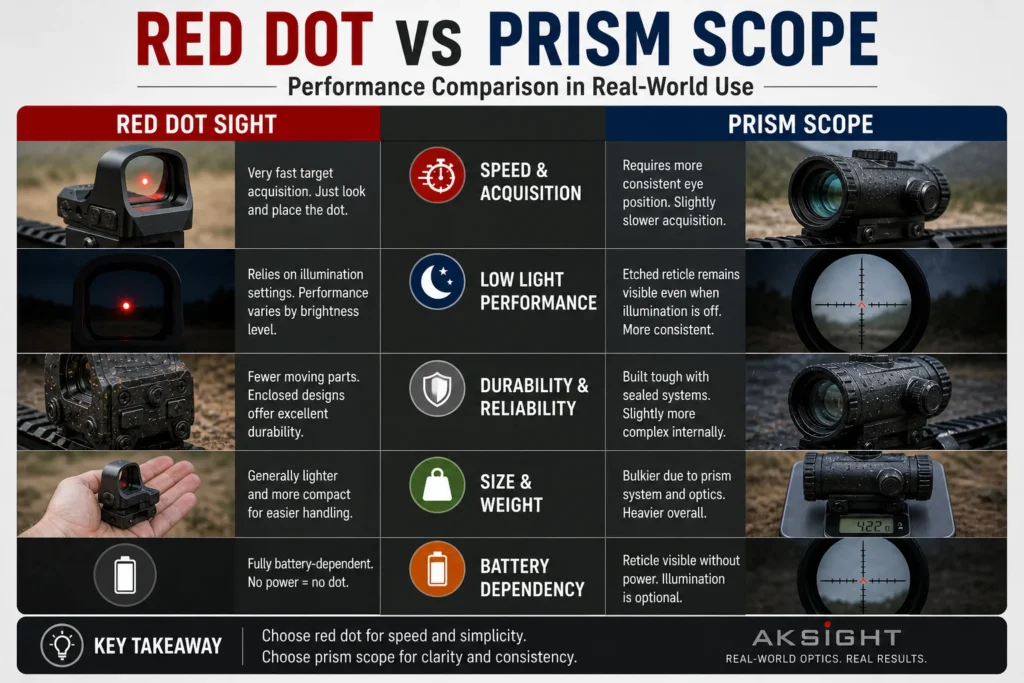
⚡ Speed & Target Acquisition
Red dots are faster. There’s no eye alignment requirement—just look and place the dot.
Prism scopes require a more consistent eye position, which can slow down rapid engagement.
👉 For speed-focused use, red dots win.
🌙 Low Light Performance
Both optics perform well in low light, but in different ways.
Red dots rely entirely on illumination settings. Prism scopes still show the etched reticle even if illumination is off.
👉 Prism scopes offer better reliability in extreme lighting conditions.
⚙️ Durability & Reliability
Red dots—especially enclosed emitter designs—are extremely durable and simple.
Prism scopes have more internal components but are still highly robust when built properly.
👉 For simplicity and fewer failure points, red dots are often preferred.
📏 Size & Weight
Red dots are generally lighter and more compact.
Prism scopes are bulkier due to internal optics.
👉 If weight matters, red dots are the better option.
👥 Who Should Choose What?
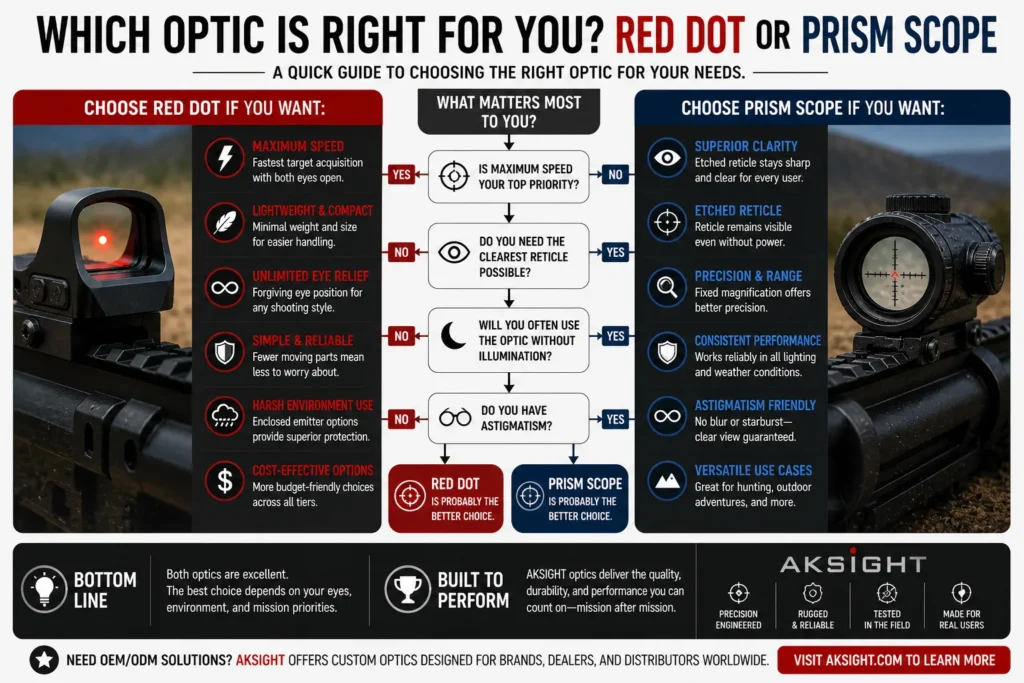
| User Type | Recommended Optic | Reason |
|---|---|---|
| Beginner users | Red Dot | Simple, intuitive, easy to use |
| Users with astigmatism | Prism Scope | Clear etched reticle |
| Speed-focused applications | Red Dot | Faster acquisition |
| Precision-focused users | Prism Scope | Sharper image and reticle |
| Harsh environment use | Enclosed Red Dot | Better protection against elements |
📊 Red Dot vs Prism Scope Comparison Table
| Feature | Red Dot | Prism Scope |
|---|---|---|
| Reticle Type | Projected LED | Etched glass |
| Clarity for Astigmatism | Can blur | Clear |
| Speed | Very fast | Moderate |
| Magnification | None (1x) | Fixed (1x–5x) |
| Weight | Light | Heavier |
| Battery Dependency | Yes | No (reticle still visible) |
❓ Red Dot vs Prism Scope FAQ
Is a red dot better than a prism scope?
It depends on your needs. Red dots are better for speed and simplicity, while prism scopes offer better clarity and precision.
Are prism scopes good for beginners?
They can be, but red dots are generally easier to learn due to their forgiving eye position.
Do prism scopes work without batteries?
Yes. The etched reticle remains visible even if illumination is off.
Why does my red dot look blurry?
This is often due to astigmatism. Prism optics can solve this issue.
Which is more durable?
Both are durable when well-built, but enclosed emitter red dots have fewer exposed elements.
🧭 Final Thoughts: Red Dot vs Prism Scope
The Red Dot vs Prism Scope decision comes down to how you prioritize speed, clarity, and reliability.
If you want lightweight performance and rapid target acquisition, red dots are the better choice. If you need crisp reticle clarity and consistent visibility, prism scopes deliver strong advantages.
At AKSIGHT, we focus on delivering durable, high-performance optics designed for real-world use. 🧩 From compact red dots to OEM/ODM-ready solutions, our goal is to provide reliable options that meet both retail and distribution needs.
Choosing the right optic starts with understanding your priorities—and building from there.