
This guide breaks down what makes a good red dot window size, how it impacts performance, and how to choose the right option based on your needs.
🔍 Why Red Dot Window Size Matters
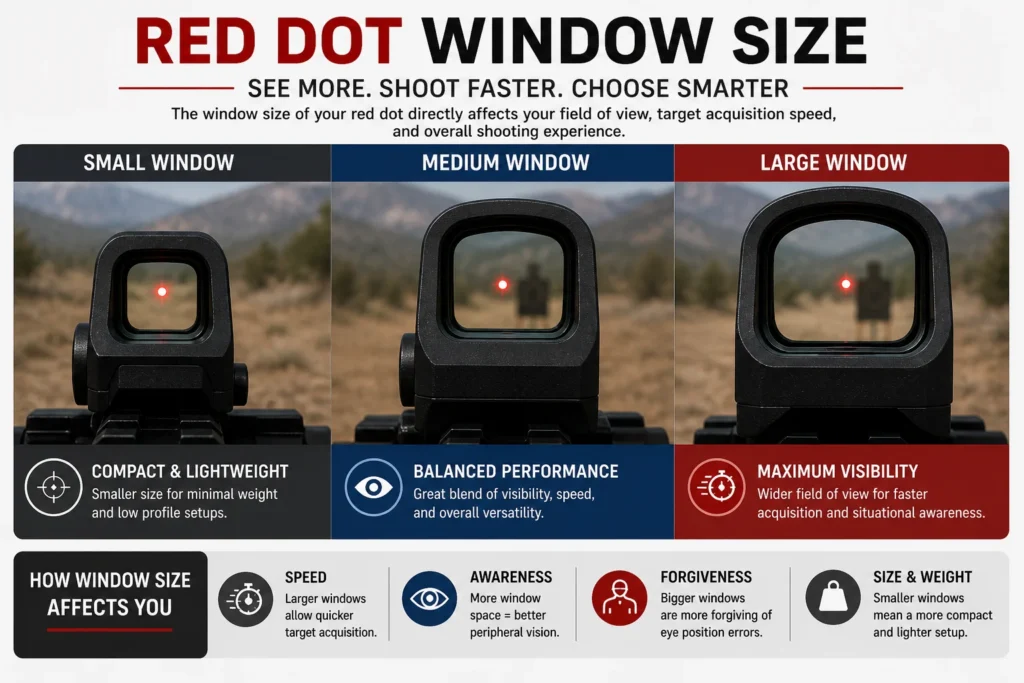
The window is your field of view. It determines how much you can see through the optic and how quickly your eye picks up the reticle.
A larger window allows faster visual alignment and better awareness. A smaller window keeps the optic compact but requires more precise positioning.
This trade-off is critical—especially for users who prioritize speed vs portability.
🔭 Types of Red Dot Window Sizes
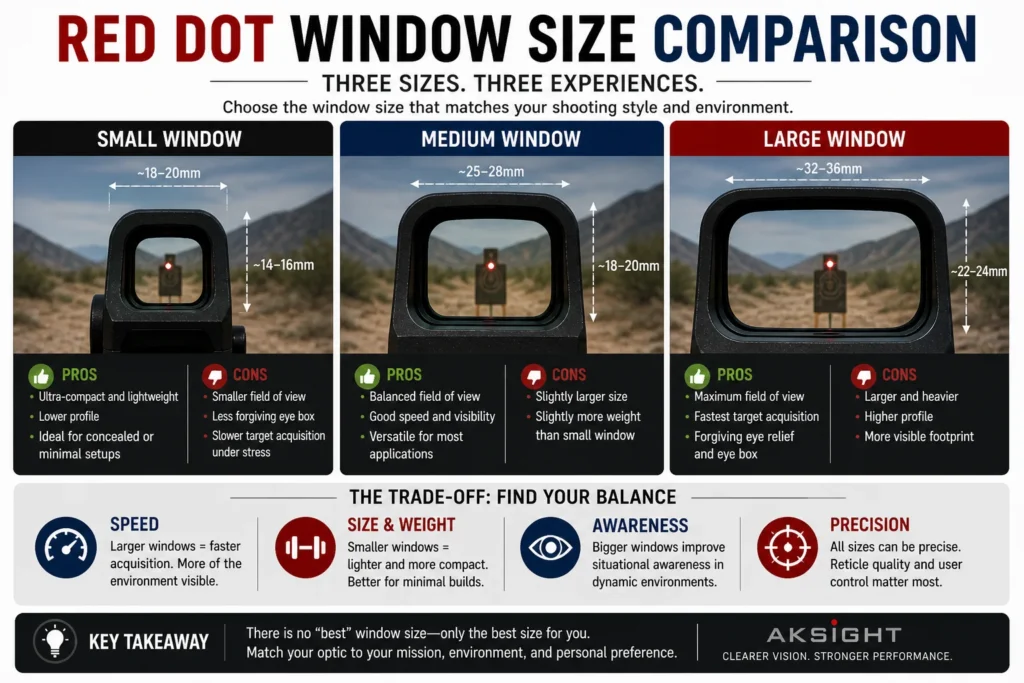
🔹 Small Window (Compact Optics)
Small window red dots are designed for minimal size and weight. They are ideal for setups where space and weight matter.
- Lightweight and low profile
- More precise eye alignment required
- Better for compact builds
🔸 Medium Window (Balanced Use)
This is the most versatile category. Medium-sized windows provide a good balance between visibility and size.
- Good field of view
- Comfortable for most users
- Balanced performance
🔶 Large Window (Maximum Visibility)
Large window optics prioritize speed and visibility. They are easier to use under pressure.
- Fast target acquisition
- Forgiving eye position
- Slightly heavier and bulkier
🎯 Key Factors When Choosing Red Dot Window Size
👁️ Speed vs Precision
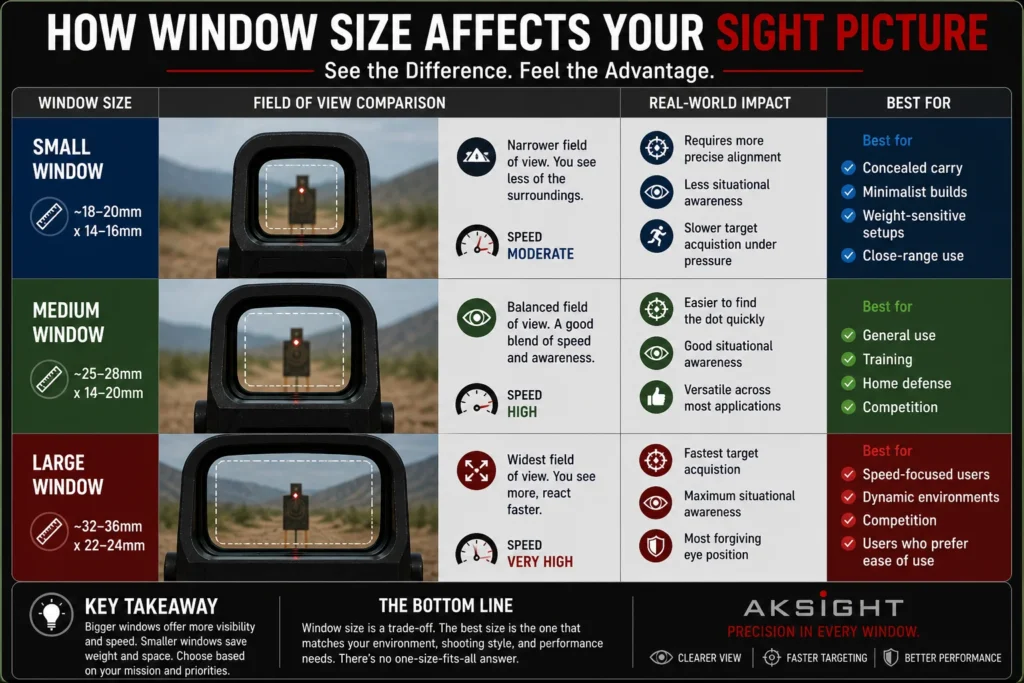
Larger windows make it easier to find the dot quickly. Smaller windows require more consistent positioning.
If speed is your priority, go larger. If compactness matters more, go smaller.
⚖️ Size vs Weight
Window size directly affects optic size and weight.
Compact optics are easier to carry. Larger optics provide better usability but add bulk.
🧭 Shooting Environment
In dynamic environments, a larger window helps maintain awareness.
In controlled environments, smaller windows are more than sufficient.
🔧 Mounting Height & Position
Window usability is also affected by mounting position. A higher mount can make smaller windows feel more usable.
👥 Which Window Size Is Right for You?
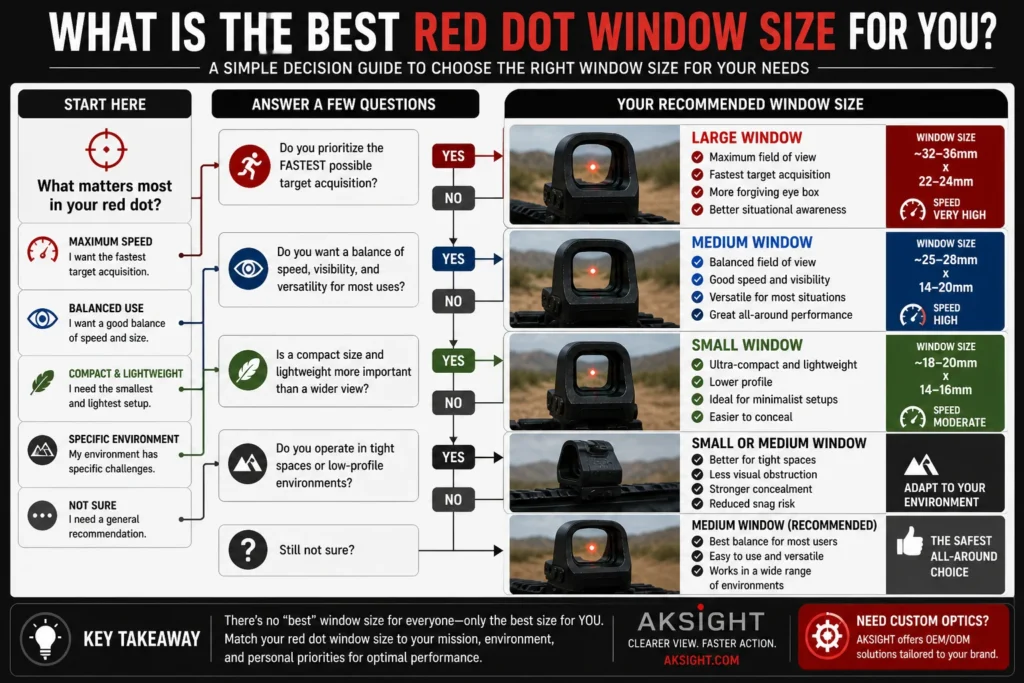
| User Type | Recommended Window Size | Reason |
|---|---|---|
| Beginner users | Medium to Large | Easier to acquire target |
| Speed-focused users | Large | Maximum visibility |
| Compact setups | Small | Lightweight and minimal |
| All-around users | Medium | Balanced performance |
📊 Window Size Comparison Table
| Window Size | Speed | Weight | Ease of Use |
|---|---|---|---|
| Small | Medium | Light | Moderate |
| Medium | High | Medium | Easy |
| Large | Very High | Heavier | Very Easy |
❓ Red Dot Window Size FAQ
Is a bigger red dot window always better?
No. Bigger windows improve speed but add size and weight. The best choice depends on your use case.
Do beginners need a larger window?
Yes. Larger windows are more forgiving and easier to learn.
Does window size affect accuracy?
Not directly. Accuracy depends more on the reticle and user control.
Are compact red dots harder to use?
They require more consistent positioning but are still effective with practice.
What is the most popular window size?
Medium-sized windows are the most widely used due to their balance.
🧭 Final Thoughts: Choosing the Right Red Dot Window Size
Choosing the right red dot window size is about balancing speed, visibility, and size.
If you prioritize fast acquisition and ease of use, larger windows are the better choice. If you need a compact and lightweight setup, smaller windows are more suitable.
At AKSIGHT, we design optics that balance performance, durability, and usability. 🧩 Whether you’re sourcing for retail or OEM/ODM production, window size is a critical factor in delivering the right user experience.
Understanding this one detail can significantly improve how your optic performs in real-world use.