
This guide explains what IP ratings mean, how they affect optic durability, and what buyers should look for when evaluating waterproof and dustproof performance.
Readers looking for rugged outdoor optics can also explore the AKSIGHT red dot sight lineup, including sealed designs built for demanding environments.
🔍 1. What Is an IP Rating?
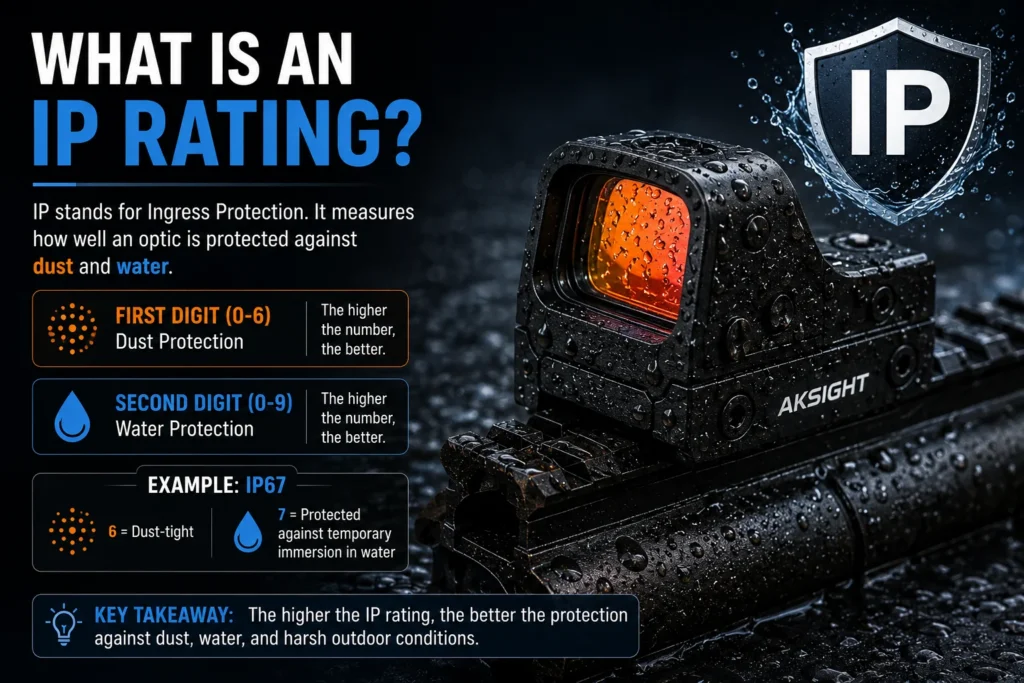
IP stands for Ingress Protection. It is an international standard used to classify how well electronic devices resist dust and water intrusion.
An IP rating usually contains two numbers:
- 🧱 First number = dust protection
- 💧 Second number = water resistance
For example:
- IPX4 = splash resistant
- IPX6 = heavy water spray resistant
- IPX7 = temporary water immersion resistant
- IP67 = dust-tight + water immersion resistant
The higher the rating, the better the environmental protection.
🌧️ 2. Why IP Ratings Matter for Optics
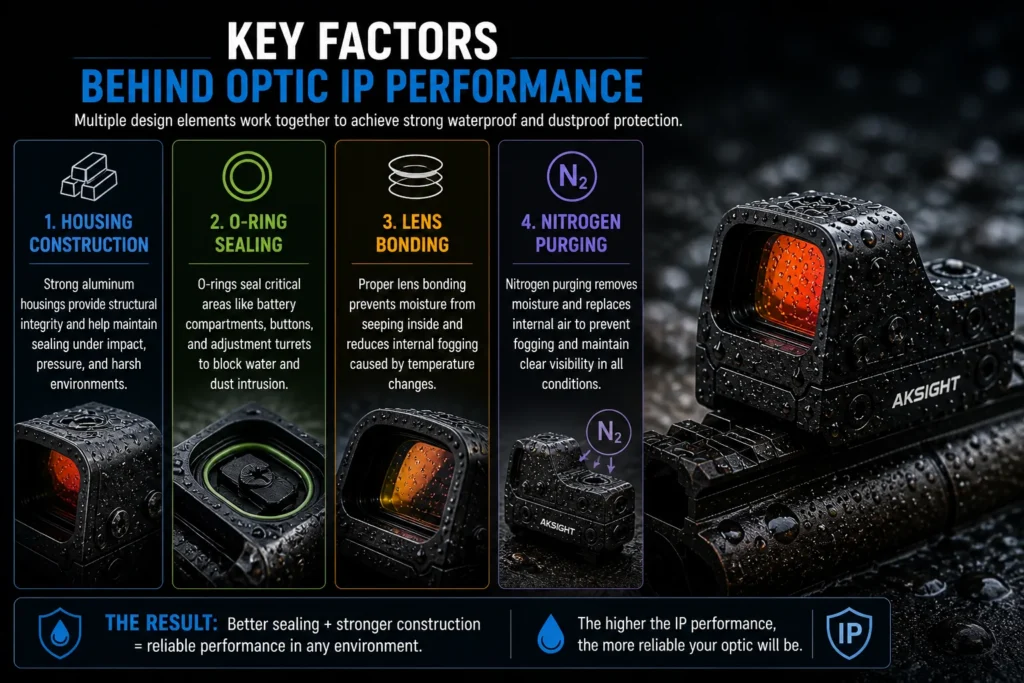
Outdoor optics constantly face environmental stress.
Rain, humidity, dust, mud, temperature changes, and accidental drops can all affect electronic performance and lens clarity.
A proper IP rating helps ensure:
- 💧 Water does not damage electronics
- 🌪️ Dust cannot enter the housing
- 🔋 Battery compartments remain sealed
- 🪞 Internal lenses resist fogging
- ⚡ Electronics continue functioning reliably
Without proper sealing, even minor moisture exposure can reduce optic lifespan.
🔭 3. Common IP Ratings Used in Red Dot Sights
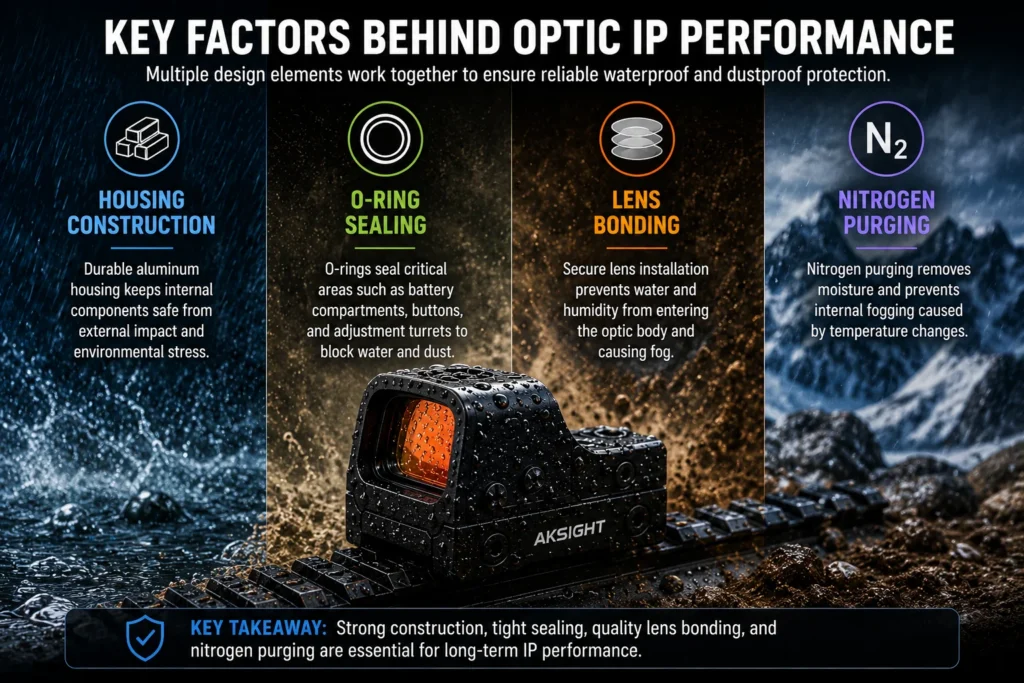
💦 IPX4 — Basic Splash Resistance
IPX4 optics resist light rain and water splashes.
These are usually considered entry-level environmental protection systems.
- Good for casual use
- Not ideal for harsh outdoor environments
- Limited moisture protection
🌧️ IPX6 — Heavy Water Resistance
IPX6 optics can handle strong water spray and heavy rain.
This level is commonly seen in mid-range outdoor optics.
- Better sealing systems
- Improved button protection
- Suitable for outdoor field use
🌊 IPX7 — Temporary Water Immersion
IPX7-rated optics can survive temporary immersion in water under controlled testing conditions.
This is one of the most popular ratings for modern red dot sights.
- Strong environmental protection
- Reliable outdoor performance
- Better long-term durability
🛡️ IP67 — Dustproof + Waterproof
IP67 adds full dust protection in addition to water immersion resistance.
This is considered a high-end environmental protection level for optics.
- Dust-tight sealing
- Excellent harsh-environment performance
- Improved internal protection
🎯 4. Key Design Factors That Affect Waterproof Performance
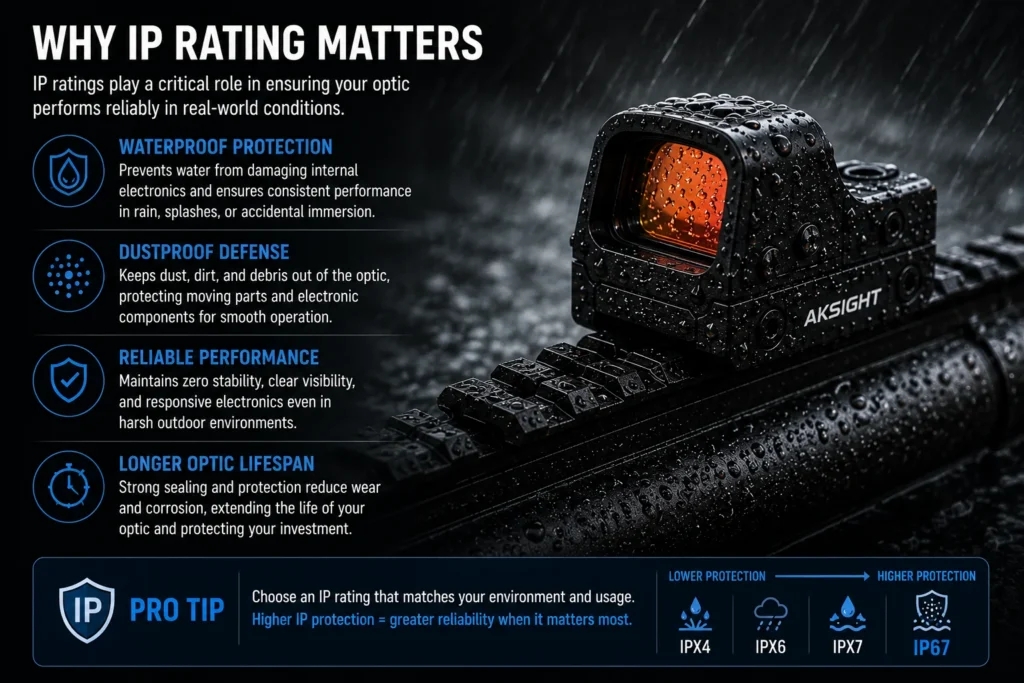
🧩 Housing Construction
Strong aluminum housings improve sealing consistency and structural durability.
🔒 O-Ring Sealing
O-rings help seal battery compartments, adjustment turrets, and electronic interfaces.
Higher-quality seals improve long-term resistance against moisture intrusion.
🪟 Lens Bonding
Improper lens installation can allow water or humidity to enter the optic body.
Professional lens bonding improves durability and fog resistance.
🌡️ Internal Nitrogen Purging
Some optics use nitrogen purging to reduce internal fogging caused by temperature changes.
📊 5. IP Rating Comparison Table
| IP Rating | Dust Protection | Water Protection | Recommended Use |
|---|---|---|---|
| IPX4 | None | Light splashes | Basic outdoor use |
| IPX6 | None | Heavy rain | General field environments |
| IPX7 | None | Temporary immersion | Professional outdoor use |
| IP67 | Dust-tight | Temporary immersion | Harsh environments |
👥 6. Which IP Rating Is Best for Different Users?
| User Type | Recommended IP Rating | Main Reason |
|---|---|---|
| Indoor users | IPX4 | Basic protection |
| Outdoor enthusiasts | IPX6 | Rain resistance |
| Professional field use | IPX7 | Higher reliability |
| Extreme environments | IP67 | Maximum protection |
| OEM/ODM projects | IP67 preferred | Commercial durability value |
🧪 7. Waterproof Testing vs Real-World Use
It is important to understand that laboratory testing does not perfectly represent real-world environments.
An optic rated for temporary immersion may still experience wear over time if repeatedly exposed to:
- 🌧️ Constant heavy rain
- 🌡️ Extreme temperature swings
- 🧂 Saltwater environments
- 💥 Repeated impacts
- ☀️ Long-term UV exposure
Build quality and long-term sealing consistency remain just as important as the official IP rating itself.
❓ 8. FAQ: IP Rating for Optics
What does IPX7 mean on a red dot sight?
IPX7 means the optic can survive temporary water immersion under controlled testing conditions.
Is IP67 better than IPX7?
Yes. IP67 includes both waterproof and dustproof protection.
Can waterproof optics fog internally?
Lower-quality sealing systems may still allow internal condensation over time.
Do all outdoor optics need IP67?
No. IPX6 or IPX7 is sufficient for most users.
Does waterproofing affect optic lifespan?
Yes. Better sealing helps protect electronics and internal lens systems from long-term damage.
📌 Final Thoughts
Understanding IP ratings for optics helps buyers choose products that can survive real-world outdoor conditions.
Water resistance is not just a marketing feature — it directly affects durability, reliability, and long-term performance.
At AKSIGHT, optic designs prioritize sealing integrity, environmental durability, and OEM-ready reliability for demanding applications.
Whether sourcing retail optics or developing private-label products, IP ratings remain one of the most important indicators of product quality.
📚 References
- IEC 60529 Ingress Protection Standard
- Environmental sealing principles in optical engineering
- Lens fog resistance and nitrogen purging references
- Outdoor electronics waterproof testing standards